
 Italiano
 Deutsch
Lessinia woods and hamlets, the Val Sorda Tibetan Bridge and the conservation project between Fumane and Marano: places and walking routes
North of Valpolicella, vineyards give way to woods, pastures, ridges and Lessinia hamlets. Easy walks and harder routes reveal nature, rural history and Veronese mountain views. A distinctive experience is the Val Sorda Tibetan Bridge; closer to Corte Lavarini, between Fumane and Marano, natural areas have been the subject of biodiversity conservation projects.
Lessinia: karst landscapes and hamlets
Lessinia occupies northern Verona province's mountains. Water shaped limestone into sinkholes, caves and other karst forms; people left alpine farms, seasonal livestock routes and small stone settlements. Higher areas are open pasture, with woods and sheltered valleys below. Walking here reveals geology, biodiversity and rural life together.
The plateau's environments change with altitude. Broad pastures dotted with alpine farms contrast with beech-covered slopes and sheltered valleys. Rural buildings preserve traditional stone use. Trails reveal mountains shaped both by geology and an old culture of summer grazing.
Further information: Visit Lessinia – tourism portal
The Val Sorda Tibetan Bridge
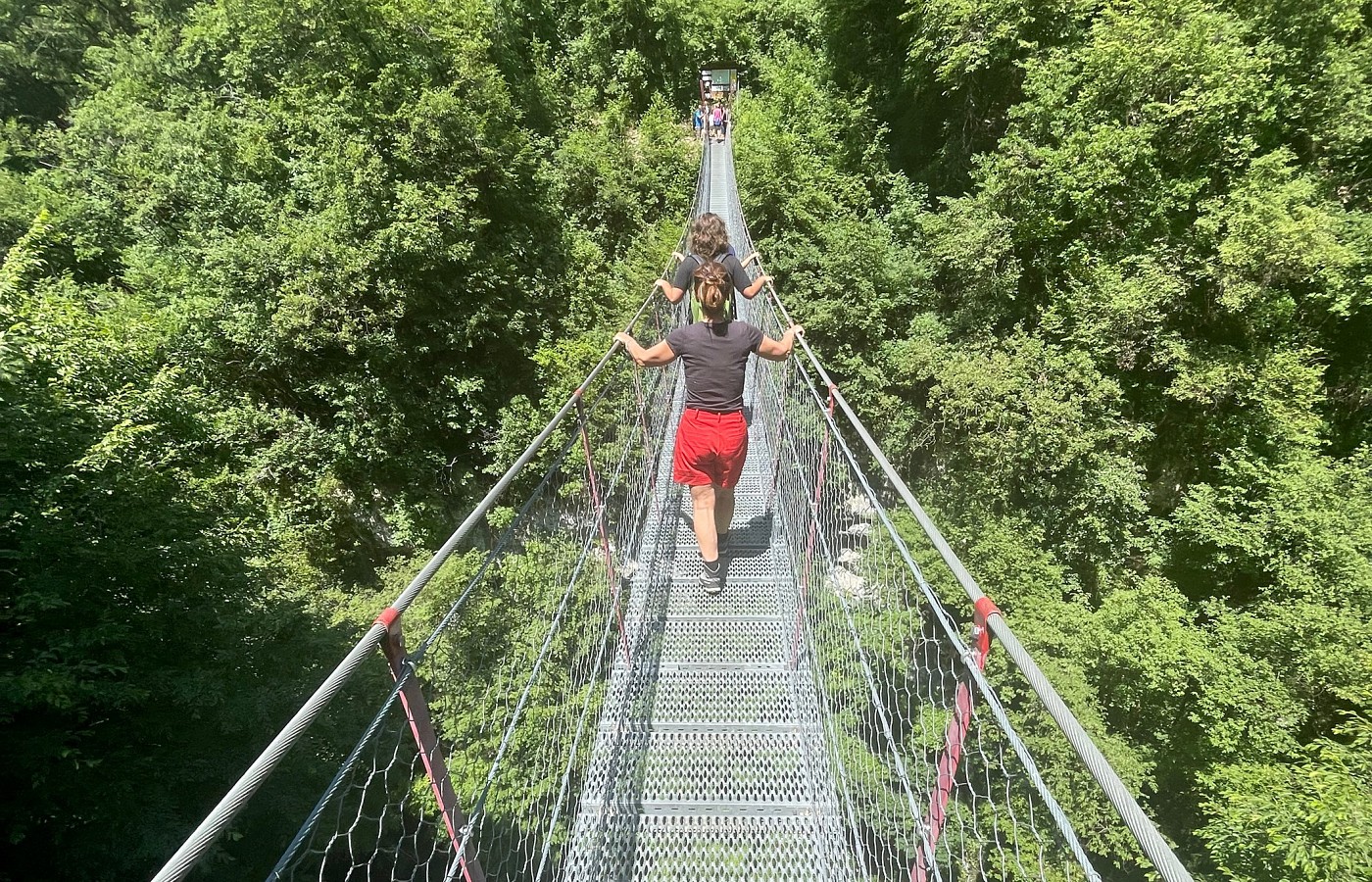
The Val Sorda Tibetan Bridge crosses a deep wooded valley between Marano di Valpolicella and Sant'Anna d'Alfaedo. It offers views down onto rock faces and vegetation: a distinctive crossing, but unsuitable for some, especially those afraid of heights. The bridge may sway slightly and remains part of a hiking route, not a pavement stroll. Check bridge and trail accessibility before setting out.
This is not an attraction reached without walking: access crosses hiking terrain with steep sections and surfaces slippery after rain. It requires suitable shoes, realistic fitness assessment and particular caution with vertigo or adverse weather.
Further information: Tibetan Bridge – Visit Verona
The route from Malga Biancari
A well-known approach starts at Malga Biancari, near San Rocco di Marano. Visit Verona describes a circular route of about 5.7 km, also crossing the Mulino del Cao area. Elevation change is substantial: from the farm at around 590 metres, descend much lower into the valley before climbing back. Bring hiking shoes, water, enough time and favourable weather; the return climb may be hardest.
From Malga Biancari at around 592 metres, the route descends to a substantially lower valley floor, making the final ascent important to consider. It may include Mulino del Cao. Bring water, start well before sunset and check any bridge-crossing restrictions before travelling.
Further information: Tibetan Bridge and access – Visit Verona
Bosco Chiesanuova and the Corbiolo hamlets
Around Bosco Chiesanuova are walks through beech woods, meadows and historic hamlets. The tourism portal's green Corbiolo hamlets route is roughly 4.5 km and takes about an hour excluding stops. It crosses small settlements and woodland, revealing stone buildings and mountain-life traces. Check passability according to season and ground conditions.
Further information: Corbiolo hamlets route – Visit Verona
Grietz to Bocca di Selva: alpine farms and pastures
Another Bosco Chiesanuova option links Grietz and Bocca di Selva. It starts near an old giassara, once used to store ice, then continues towards pastures and alpine farms. Visit Verona describes about 4.5 km one way, 290 metres of ascent and roughly one hour ten minutes. Plan the return separately.
Further information: Grietz–Bocca di Selva – Visit Verona
Erbezzo: monumental trees and traditions
Near Erbezzo, a route reaches the Tiglio dei Valbusi lime tree and Faggio della Madonnina beech, locally significant trees. The loop is approximately 6 km, described with about 220 metres elevation change and three and a half hours walking. Hamlets, back roads and woodland reveal scenery different from open plateaus. A popular tradition surrounding the Madonnina beech also underlines its community significance.
Further information: Erbezzo itinerary – Visit Verona
The Fumane and Marano Natural Park project
Between Fumane and Marano di Valpolicella lie woods, clearings, rock outcrops and important biodiversity habitats. COGEV cooperative documents the Fumane and Marano di Valpolicella Natural Park project, with conservation and environmental management in 2008–2017. Its aim was habitat diversity and species protection. Distinguish this conservation project from an equipped visitor park: documentation does not establish a ticket office, organised visits or trails with dedicated services. Walk only on genuinely accessible public routes.
COGEV describes work and studies carried out between 2008 and 2017 to conserve habitats. Woods, clearings and rock outcrops create ecological variety. Some management preserves open areas that trees would otherwise gradually colonise. It would be incorrect to present the project as a park with verified tourist routes and services.
Further information: COGEV – Fumane and Marano Natural Park
Choosing the right route
For a relatively short woodland and hamlet walk, consider Corbiolo; for open scenery, Grietz–Bocca di Selva. The Tibetan Bridge is harder for elevation and exposure; Erbezzo offers monumental trees and old rural settlements. Lengths and times are approximate: check trails, weather, snow or ice and your abilities before leaving.
Further information: Visit Verona – routes and nature
Lessinia through four seasons
Spring fills woods with new leaves; summer offers cooler mountain temperatures. Autumn colours the beech woods and gives hamlets special atmosphere. Winter snow and ice can require specific equipment and skills: many routes cannot be treated as simple walks.
Spring suits lower elevations, while summer mountains may relieve plain heat. Autumn beech woods offer intense colours; winter snow and ice transform trail difficulty. In every season, check route conditions and forecasts.
Further information: Visit Lessinia
A day in nature from Corte Lavarini
Lessinia complements Valpolicella cultural visits with movement and landscape. From the Tibetan Bridge to hamlet trails, alpine farms and natural areas near Fumane, different places reveal geology, biodiversity and mountain communities' work. Often the best choice is one itinerary with enough time, rather than too many stops.