
 Italiano
 Deutsch

Discover Valpolicella by bicycle among vineyards, historic villages, scenic routes and cycle paths surrounded by nature
Valpolicella is particularly rewarding to explore by bicycle. Roads through vineyards, small villages, hills and farmland reveal the landscape from a different perspective than a car.
Between Fumane, San Pietro in Cariano, Sant'Ambrogio and Marano are routes of different difficulty, from relatively easy flat rides to demanding hillside itineraries.
Nearby Lake Garda and the Adige valley broaden the options with important cycle-touring routes.
For Corte Lavarini guests in Fumane, cycling pleasantly introduces the region, historic villages and some of Valpolicella's most characteristic areas.
Cycle paths and cycle-touring routes: an important distinction
Before choosing an itinerary, distinguish a cycle path from a cycle-touring route.
A cycle path is designated for bicycles, separated or regulated relative to other traffic. A touring itinerary may combine cycle paths, back roads, unpaved sections and roads shared with cars.
This particularly matters in Valpolicella, where many appealing vineyard and village roads are not exclusively for cyclists.
There are many possibilities, but assess difficulty, road surfaces and traffic carefully. Families with young children should favour protected or particularly easy routes.
Adults used to cycling can consider hillside routes, perhaps using an electric bike.
Cycling between Fumane, Sant'Ambrogio and San Pietro in Cariano
One especially interesting itinerary for Corte Lavarini guests crosses lower Valpolicella Classica.
Valpolicella Adventure's circular route covers around 20.7 kilometres, through Fumane, Sant'Ambrogio di Valpolicella and San Pietro in Cariano.
Mainly flat with some short climbs, it follows back roads and vineyard sections. Allow approximately two or three hours depending on pace and stops.
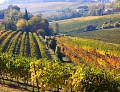
Along the way are cultivated vines, old rural courtyards, stone houses and hill views.
Described as relatively easy, it nevertheless includes public roads and some unpaved sections. Use a suitable bicycle and consult the map beforehand.
It suits riders seeking limited elevation challenges while remaining attentive on shared roads. It is an excellent way to discover Valpolicella's agricultural landscape directly.
Further information: Valpolicella tour – 20.7 km route
La Carianese: a route through Valpolicella farmland
Another option is the Carianese cycling route, listed by the Consorzio Pro Loco Valpolicella.
San Pietro in Cariano offers vineyards, country roads and small settlements. Cycling reveals farming's relationship with rural architecture, passing historic courtyards and residences reflecting a long agricultural tradition.
This area particularly suits those who prefer not to climb the higher hills.
Consult the route description and individual sections beforehand. A listed cycling route is not necessarily a path separated from traffic.
Further information: Consorzio Pro Loco Valpolicella – cycling routes
From Fumane towards San Giorgio di Valpolicella
For more panoramic riding, consider routes linking Fumane and San Giorgio di Valpolicella.
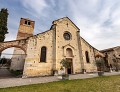
San Giorgio is a historic hilltop village in Sant'Ambrogio, known for stone houses, a Romanesque parish church and surrounding views.
Reaching it by bicycle combines relatively flat sections with climbs. Effort depends on the road, starting point and bicycle.
Consult an established route rather than improvising on potentially steep roads.
An e-bike can ease climbing but does not replace downhill handling skills. Once in the village, stop and explore the historic centre on foot.
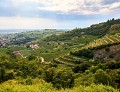
The climb rewards you with Valpolicella hill views and, on clear days, towards Lake Garda.
Further information: Cycling between Fumane and San Giorgio – ValpolicellaWeb
The Adige valley: cycling between river and mountains
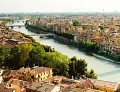
Valpolicella is close to another rewarding cycling environment: the Adige valley. The river crosses mountains, vineyards, small towns and important transport routes.
Volargne and Dolcè provide access to roads and itineraries heading up the valley.
Unlike central Valpolicella's hills, the valley floor is enclosed by mountain walls, with the river accompanying long stretches.
Some routes head towards Valdadige, joining the wider Trentino and Veneto touring network. Check your route: not every connection is a protected cycle path.
The valley also suits fitter cyclists seeking longer distances.
Further information: ValpolicellaWeb – Volargne's attractions and other routes
The Mincio cycle path: Peschiera del Garda to Borghetto and Mantua
One of Verona's best-known nearby touring experiences is the Mincio cycle path, linking Peschiera del Garda and Mantua.
Different from Valpolicella's hillside routes, it particularly suits those seeking limited elevation changes.
It largely follows the Mincio through countryside, small towns and riverside environments. Peschiera–Mantua totals about 37–45 kilometres, depending on start and variant.
A distinctive stop is Borghetto sul Mincio, part of Valeggio, known for old mills, waterside houses and nearby Ponte Visconteo.
Borghetto makes an appealing destination for a shorter ride from Peschiera.
For longer outings, continue to Mantua through Mincio Park scenery. Families should choose part of the route, assessing distance and participants' abilities beforehand.
This itinerary may also include road crossings and unpaved sections.
Further information: Mantua–Peschiera cycle path – Mantua tourism portal
The Ciclovia del Sole: a major European itinerary
The Mincio route links to a much larger touring project: the Ciclovia del Sole.
Part of EuroVelo 7 connecting northern Europe and the Mediterranean, its Italian route crosses several regions, including Verona, Custoza country, the Mincio and Mantua.
Intended mainly for multi-day touring, some sections also suit shorter trips.
It illustrates cycling networks' potential to promote regions and more sustainable tourism.
Distinguish the overall project from sections already built or actually rideable. Consult current maps and check conditions before using it.
Further information: Ciclovia del Sole – official itinerary
Valpolicella by e-bike: more accessible hills
Electrically assisted bicycles, commonly called e-bikes, have expanded opportunities for exploring Valpolicella.
Motor assistance lets less-trained riders tackle some climbs with less effort, reaching villages and viewpoints requiring greater fitness on conventional bikes.
E-bikes particularly suit hills between Fumane, Marano, Negrar and Sant'Ambrogio.
Types differ: some suit mainly tarmac, others gravel roads or trails. Choose according to terrain, not distance alone.
Assistance helps uphill but does not remove handling challenges, especially on steep descents, gravel or uneven ground.
Visitors unfamiliar with the area may benefit from hire providers and accompanied tours.
Guided tours and bicycle hire
For guests without their own bicycle, local hire is practical.
Some operators offer mountain bikes, e-bikes and guided routes matched to experience.
Check bicycle type, whether helmet and accessories are included, and assistance if problems arise.
For guided tours, ask about distance, elevation and surfaces. A knowledgeable guide helps select suitable roads and explains places along the way, making the ride an experience of discovery.
Families should check children's bicycles and any minimum ages.
Further information: Valpolicella Adventure – tours and e-bike hire
Which route suits your experience?
Not every itinerary suits everyone. For a relatively easy ride among vines and farmland, consider the lower Valpolicella loop.
Fit riders seeking views can choose hills towards San Giorgio or higher areas.
The Mincio path is a good alternative for flatter terrain and flexible distances.
Experienced touring cyclists find longer connections in the Adige valley and Ciclovia del Sole.
Always check the actual route, weather and road type before leaving.
When to cycle in Valpolicella
Spring and autumn are generally most pleasant. Spring brings milder temperatures and colour returning to vineyards; autumn offers especially atmospheric hues.
Summer's long daylight allows longer rides, but avoid midday on the hottest days.
Winter rain, cold and possible ice require greater caution, especially on hill roads.
In any season, carry water, wear a helmet and check the bicycle beforehand. On public roads, follow traffic rules and pay particular attention at junctions and on descents.
Exploring Valpolicella from Corte Lavarini
Corte Lavarini in Fumane is well placed for exploring Valpolicella Classica by bicycle.
Nearby farmland, back roads and connections to neighbouring towns allow routes of different lengths.
For a relaxed experience, consider lower Valpolicella; fitter guests can choose hillside routes.
For a longer cycle path, drive to Peschiera del Garda and start a Mincio excursion there.
Choose according to fitness, time and bicycle type.
Discover Valpolicella at cycling pace
Cycling reveals a region where nature, agriculture and history coexist in relatively small distances.
Vineyards, villas, stone villages and country roads become part of movement and cultural discovery.
Options range from easy lower Valpolicella rides to hills and the paths of Lake Garda and the Mincio.
During a Corte Lavarini stay, a cycling day pleasantly introduces landscape and traditions on a route suited to your abilities.