
 Italiano
 Deutsch
Two extraordinary places near Corte Lavarini: the trails and waterfalls of Molina and the archaeological discoveries of Fumane Cave
A few kilometres from Valpolicella's vineyards, the Fumane area holds two very different places that both tell the history of these hills: Molina Waterfall Park and Fumane Cave. The first is a natural setting shaped by woods, streams and waterfalls; the second an internationally important archaeological site preserving traces of Neanderthals and early Homo sapiens. Both enrich a stay at Corte Lavarini through nature and the region's origins.
Molina Waterfall Park: a surprising natural setting
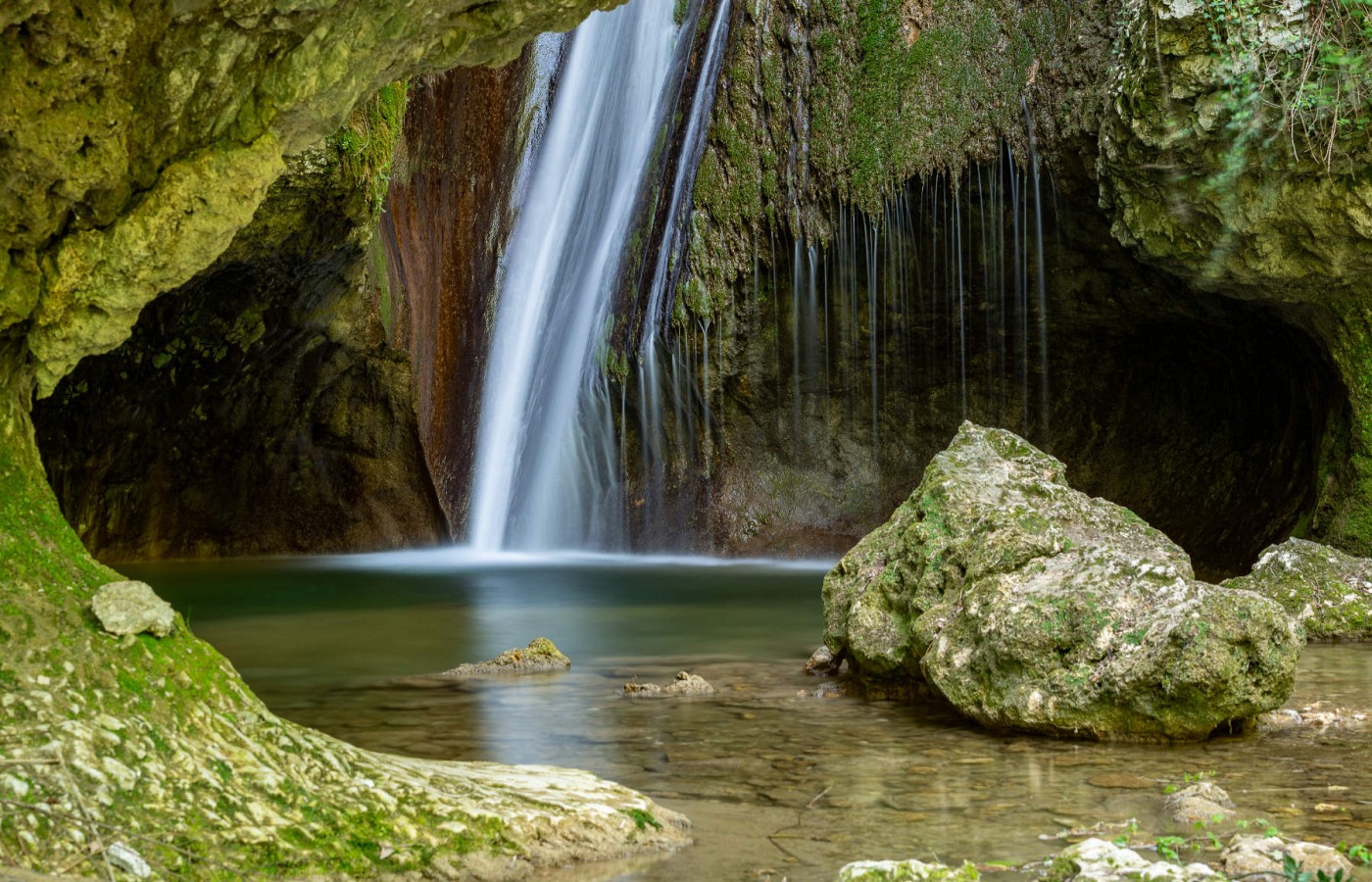
The park is near Molina, a village within Fumane on the first Lessinia hills. Springs and streams have eroded limestone over time, carving gorges and cavities and creating numerous waterfalls. Trails pass walkways, little bridges, rock faces and cool woods; scenery changes with the season and water flow. Explore carefully and respectfully, without entering streams or natural pools.
Water acting on limestone over immense periods has shaped the area's geology. Springs and streams formed gorges and small cavities, offering scenery different from the valley vineyards. The park belongs to a protected natural setting where visits must respect habitats and their living organisms.
Further information: Waterfall Park – official website
The waterfalls and most distinctive places
Sights include Cascata Spolverona, Cascata Nera, Cascata Verde and, on longer routes, Cascata dell'Orso and other water-carved formations. Each waterfall has a different setting: some framed by vegetation, others between rock faces. Observe wetlands and woodland flora, particularly lush in favourable seasons. Names and accessible sights vary with the chosen route and park conditions.
Routes may also include Pozzo dell'Orso, Cascata del Tombolo and Grotta delle Tette More, an unusual rock formation. Some waterfalls flow between narrow walls, others in open spaces; water volume changes with rainfall. Cool, damp sections hold trees and plants typical of hillside woodland. Follow signs and any temporary closures to determine accessible areas.
Further information: Official map and routes
Three routes to choose from
The park offers three colour-coded circular routes. The Green Route, around 1.2 km and 30 minutes, is shortest; the Red, around 2.5 km and one hour, explores more waterfalls; the Black, around 3.6 km and two hours, is most demanding and reaches inner areas. Times are approximate and do not necessarily include stops. From the car park, walk about 700 metres to the entrance, descending 100 metres that must be climbed on return. Shoes with good grip are recommended; natural trails are unsuitable for pushchairs or wheelchairs. Always check routes and opening before leaving.
Green suits a shorter visit, but still crosses natural ground. Red takes longer and reveals more sights. Black includes climbs, descents and harder sections: assess your fitness before choosing. The three stated durations exclude photo stops and walks from the car park.
Further information: Routes, duration and difficulty
Molina, the village of old mills
Spend a little time in Molina itself. Its name recalls mills using water power for agricultural processing and crafts. Stone buildings, courtyards and narrow streets retain the character of Lessinia's rural hamlets. The village completes a waterfall visit: natural landscape and local work share the same resource, water.
Abundant water shaped the village economy. Mills processed farm products, while stone houses and small communal spaces reflect the organisation of old hamlets. A village walk connects the park's scenery to the daily activities of former inhabitants.
Further information: Waterfall Park and Molina village
Fumane Cave: an archive of prehistory
Near Fumane is Fumane Cave, also called Riparo Solinas. Sediment layers document human presence and environmental changes over tens of thousands of years. Archaeologists found stone tools, animal remains, hearth traces and other evidence reconstructing daily life. The site is especially important for studying the transition from the Middle Palaeolithic, associated with Neanderthals, to the Upper Palaeolithic and the spread of Homo sapiens in Europe. Research has made this shelter a European reference point for understanding the period.
Successive archaeological levels reveal important changes in lifestyles and natural environments. The site particularly contributes to studying the transition between Neanderthal populations and early Homo sapiens. Collecting and studying finds, alongside reconstructing climatic conditions, makes the cave a continuing place of significant scientific research.
Further information: Fumane Cave – official website
Neanderthals, Homo sapiens and symbolic evidence
Finds reveal stoneworking, hunting and fire use, but also more complex behaviour. Evidence involving birds of prey bones and feathers has fuelled debate about Neanderthal symbolic practices. A famous find is the so-called Shaman Stone, a fragment painted with red pigment attributed to early Homo sapiens occupation. Its image has different interpretations: this caution makes a visit interesting, showing how archaeologists formulate and test hypotheses.
Finds also include animal remains and traces of techniques used by different human groups. The Shaman Stone is particularly known for its red pigment and a figure whose interpretation remains debated. Discoveries do not give simple answers to every question, but document considerable technical ability and behavioural complexity.
Further information: Discover the cave and its research
How to visit Fumane Cave
Visits follow the managers' schedules and arrangements and may be accompanied by specialist guides and operators. Explore stratigraphy, finds and excavation techniques. The area also includes the PaleoCenter, dedicated to education and visitor welcome. Openings may be seasonal: check programmes and book ahead, especially with children or groups.
Archaeologists and guides explain excavation layers, dating finds and reconstructing prehistoric life. The PaleoCenter helps adults and young people approach these subjects. Check actual dates and times before leaving: this is not a monument offering continuous unrestricted admission.
Further information: Fumane Cave – visitor information
Planning both visits from Corte Lavarini
The waterfall park requires time for walking and elevation changes; the cave is a cultural visit planned around available times. Both can be considered for one day, without underestimating stops, travel and the effort of returning from the park. Check access restrictions after heavy rain or in unfavourable conditions. Both are near Corte Lavarini and reveal a different Valpolicella from vineyards and villas.
Further information: Current park information
Nature and history: two stories of one region
Molina waterfalls show water shaping rocks and ecosystems; Fumane Cave preserves traces of humans who visited these valleys in the distant past. Together they reveal a Valpolicella where geology, nature and archaeology tell a much older story than today's agricultural landscapes.