
 Italiano
 Deutsch
From Romanesque San Floriano to Santa Maria di Valverde and Madonna de La Salette: art, history and views in Valpolicella
Among Valpolicella's vineyards and villages are churches, Romanesque parish churches and sanctuaries telling centuries of religious and artistic history. Some preserve sculpture, frescoes and older materials; others stand on hills offering particularly evocative views. Major sites include the Pieve di San Floriano, the Sanctuary of Santa Maria di Valverde on Monte Castelon, the Madonna de La Salette in Fumane and the parish church of San Giorgio di Valpolicella.
The Romanesque parish church of San Floriano
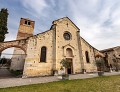
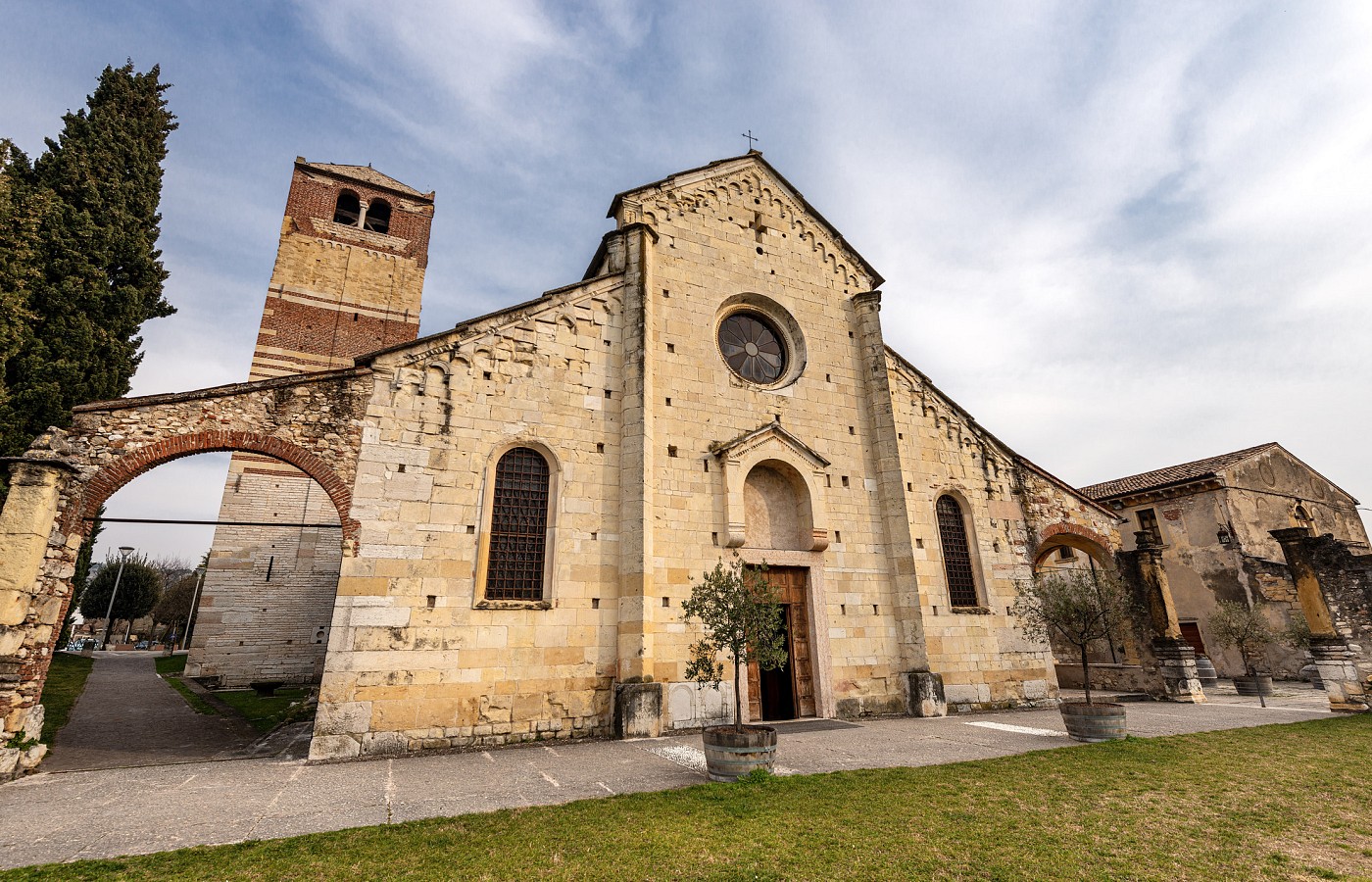
In the village of San Floriano, within San Pietro in Cariano, stands one of the most important examples of Veronese Romanesque architecture. The present church dates mainly from the twelfth century, but occupies an older place of worship and preserves reused materials. In the Middle Ages, a pieve was more than a chapel: it held central religious functions locally, particularly baptism and relations with neighbouring communities. San Floriano therefore long served an area extending beyond the village.
The parish church was not just the village's place for services: it played a central role for surrounding medieval communities. Its right to administer baptism and position among nearby settlements made it a religious and social landmark. Ancient materials and successive construction phases also document its long history.
Further information: Pieve di San Floriano – Visit Verona
Architecture and details of San Floriano parish church
The building has three aisles and a restrained façade of tuff blocks. Beside it rises a square bell tower distinguished by stone, tuff and brick. The interior preserves evidence of different periods, including traces of the complex's earliest history. Its austere, balanced appearance, construction quality and reuse of ancient materials make it a valuable stop for understanding Valpolicella's medieval art.
The three aisles, tuff façade and square bell tower show recognisable Romanesque features. The tower combines materials, alternating the colours of stone, tuff and brick. The ensemble retains the sober, monumental appearance of Veronese parish churches and shows how communities used locally available resources.
Further information: Verona tourist information
The Sanctuary of Santa Maria di Valverde on Monte Castelon
Within Marano di Valpolicella, at about 580 metres above sea level, stands the Sanctuary of Santa Maria di Valverde. Its panoramic position on Monte Castelon overlooks the Marano and Fumane valleys and, in clear conditions, surrounding hills. It is interesting for both landscape and the many layers of historical evidence. The present religious building dates mainly from the seventeenth century and holds works connected with Marian devotion.
The elevated position is part of its appeal: around the sanctuary you see the Marano and Fumane valleys, cultivated slopes and, in good visibility, more distant landscapes. The place offers more than views, as Monte Castelon preserves traces of very ancient activity from different phases of local history.
Further information: Sanctuary of Santa Maria di Valverde – Visit Verona
Valverde: from ancient evidence to Marian worship
Monte Castelon was already frequented in antiquity. Finds link it to the worship of Minerva and the Arusnates, who inhabited Valpolicella before and during Roman times. The name Castelon also recalls later fortifications. Marian worship developed with Christianity. The present sanctuary is traditionally dated to 1682 and preserves a wooden Madonna and Child dated 1516. Local traditions linking the site to Roman historical figures should be distinguished from established archaeological evidence.
The area has evidence associated with the goddess Minerva and the Arusnate peoples. The Christian sanctuary developed later, and the present building dates mainly to 1682. Inside is a wooden Madonna and Child dated 1516. Archaeological finds should be distinguished from orally transmitted traditions about the mountain's past.
Further information: The Marano di Valpolicella area
The Madonna de La Salette in Fumane
On the hills above Fumane stands the Sanctuary of the Madonna de La Salette, associated with popular devotion and the village's agricultural history. Built in 1864, it dates from a period when the community feared a serious vine disease. Its dedication recalls the Marian apparitions at La Salette, France, in 1846. Since then it has been a place of prayer and remembrance for the valley's inhabitants, revealing how viticulture intertwines with local social and religious life.
The church was built in 1864, in the context of devotion spreading after the 1846 apparitions at La Salette in France. For an agricultural community deeply dependent on vines, concern about vineyard diseases contributed to the sanctuary's significance. These origins bear witness to the links between faith, everyday life and rural work.
Further information: Sanctuary of the Madonna de La Salette – Visit Verona
A short scenic walk above Fumane
The sanctuary's hillside position overlooks the village, vineyards and valley olive groves. Local routes lead there; assess elevation changes and road or trail conditions. Along the way are traditional dry-stone walls, called marogne, supporting many Valpolicella terraces. Church openings may depend on services: respect worship times and local guidance when arranging a visit.
The hillside trail reveals terraces with marogne dry-stone walls and glimpses of the valley. Consider its uphill character before setting out. The outdoor spaces can be a walking destination, while entry to the church depends on services and openings established by the community.
Further information: Visitor information about the sanctuary
The parish church of San Giorgio di Valpolicella
In San Giorgio Ingannapoltron, within Sant'Ambrogio di Valpolicella, stands another outstanding Romanesque parish church. The building preserves early medieval traces and structures rearranged in the twelfth century. Important features include the ancient stone ciborium associated with master Orso and medieval paintings. Beside the church are a cloister and collections of local finds. A religious visit can be combined with exploring the village, which has its own Corte Lavarini article; here we focus on the church's historical and artistic value.
The complex includes the ancient stone ciborium associated with master Orso, medieval frescoes and the Romanesque cloister. Visiting introduces the relationship between sacred art and local community history. The surrounding village, known as San Giorgio Ingannapoltron, is discussed in a dedicated article, avoiding repetition here of its stone houses and traditions.
Further information: Pieve di San Giorgio – Visit Verona
Why parish churches mattered in Valpolicella
Medieval parish churches had a role beyond religious services. They were landmarks for rural communities spread between valleys and hills, connected with baptism, celebrations and collective life. Their tuff, limestone and brick reflect locally available materials. Several buildings reveal successive construction phases, showing the continuity of places frequented for centuries.
During the Middle Ages, parish churches connected scattered valley settlements. More than liturgical places, their history records the emergence of a network of communities, routes and landmarks. Architectural changes over centuries now reveal traces of different periods in a single building.
Further information: Visit Verona – religious heritage
Planning a visit from Corte Lavarini
These churches are in different villages and hillside areas. From Corte Lavarini, start with Madonna de La Salette in Fumane or head to San Floriano parish church. Allow time for Monte Castelon's views when visiting Santa Maria di Valverde; San Giorgio parish church combines with its village and stone houses. Travelling by car between places is advisable, as is checking openings: these are places of worship where services take priority over sightseeing.
Further information: Visit Verona – routes and places
Art, faith and history in the Veronese hills
San Floriano and San Giorgio preserve important medieval architecture; Santa Maria di Valverde and Madonna de La Salette add devotion and panoramic settings. These places tell of a Valpolicella of communities, traditions and artistic heritage as well as vineyards and historic houses. For Corte Lavarini guests they are rewarding destinations to discover calmly and respectfully.