
 Italiano
 Deutsch
From Lazise's medieval harbour to the castles of Torri del Benaco and Malcesine: Lake Garda's most interesting towns, close to Valpolicella
Lake Garda combines Mediterranean scenery, historic villages, medieval castles and small harbours beneath the mountains. The eastern shore, called the Riviera degli Olivi, particularly suits visitors staying in Valpolicella: Lazise, Bardolino, Garda, Torri del Benaco and Malcesine each have their own identity. From Corte Lavarini in Fumane, southern lakeside towns are roughly half an hour or slightly more away, depending on traffic. Choose a day trip or spend several days exploring different villages.
Lazise: medieval walls, castle and old harbour
Lazise preserves a historic centre enclosed by medieval walls. In 983 Emperor Otto II granted special privileges, remembered among Italy's earliest forms of municipal autonomy. The Scaliger Castle, with towers and battlements, recalls the village's strategic importance; it is private and not normally open inside. Beyond the gates are lanes, little squares and the atmospheric Porto Vecchio. Here stands the Romanesque church of San Nicolò, with traces of medieval painting, while the nearby Dogana Veneta, once connected to commerce and shipping, now hosts events. A walk on the Marconi waterfront completes the visit. Inland at Colà is Garda Thermal Park, in the grounds of Villa dei Cedri. Entering through Porta San Zeno or another medieval gate reveals paved lanes and little squares. The old harbour is flanked by Romanesque San Nicolò, with medieval paintings, and the Dogana Veneta, historically connected with trade and shipping. The Marconi promenade continues along the shore. Inland at Colà, Garda Thermal Park occupies Villa dei Cedri's historic grounds.
Further information: Lazise – Municipality of Lazise
Bardolino: wine, Romanesque churches and waterfront
Bardolino combines lakeside atmosphere with wine and olive oil traditions. In the historic centre, the church of San Severo is an important Romanesque example with medieval frescoes; smaller San Zeno has early medieval origins. Surrounding hills produce Bardolino DOC and Chiaretto di Bardolino. Explore this culture through the Wine Museum and Olive Oil Museum in nearby Cisano. The waterfront offers walks among small landing places and water views, continuing towards Cisano. Bardolino also preserves early medieval San Zeno. Surrounding vineyards produce grapes for Bardolino DOC and Chiaretto, while nearby Cisano has places dedicated to oil and wine history. The waterfront walk towards Cisano alternates small landings and open lake views.
Further information: Lake Garda tourism
Garda: the bay, historic centre and Rocca
Garda, which gave the lake its name, overlooks a bay dominated by the Rocca. Its streets hold courtyards and old buildings, including the Palazzo dei Capitani, overlooking the harbour with Venetian Gothic forms. The promenade offers views of boats and mountains. Walkers can climb the Rocca di Garda on hillside trails, wearing suitable shoes, for extensive bay views. Garda also makes a convenient base for Punta San Vigilio. Palazzo dei Capitani deserves attention for its harbour position and Venetian Gothic architecture. For a nature walk, the Rocca offers a viewpoint reached by hillside trails: suitable shoes are advisable, especially after rain.
Further information: Lake Garda tourism
Punta San Vigilio: an atmospheric corner of the lake
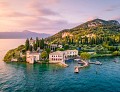
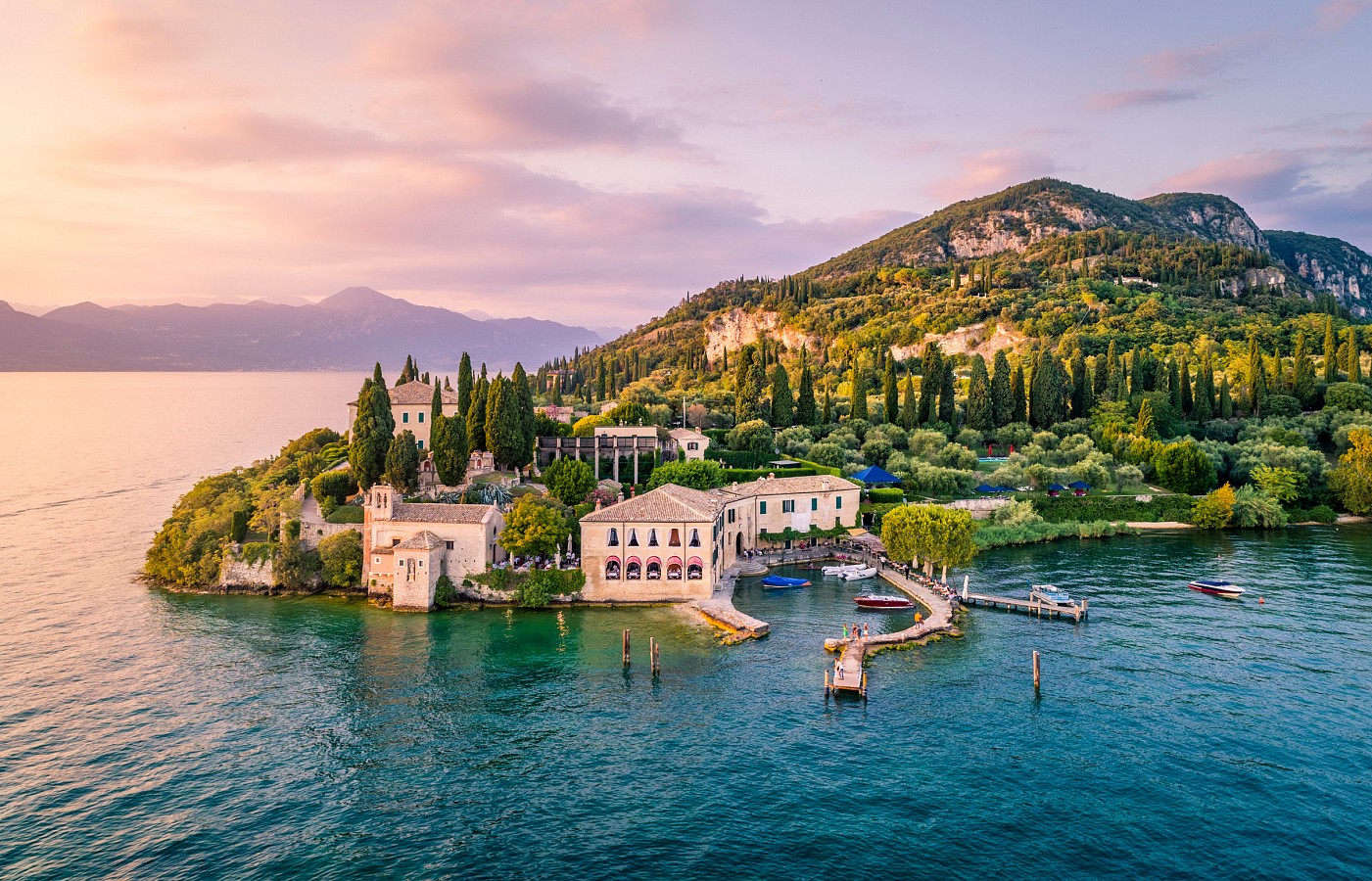
Just north of Garda is Punta San Vigilio, a headland with a little harbour, stone buildings, gardens and a historic villa. It is one of Garda's most recognisable views. The villa and much of the estate are private; access depends on the activities operating in each area. Nearby Baia delle Sirene is appreciated for clear water and scenery; when open, admission to the bathing facility is regulated and generally paid. Combine the visit with Garda or Torri del Benaco. Framed by historic buildings and vegetation, the harbour is an iconic Garda image. The villa and gardens are not freely accessible because they are private; conditions for accessing spaces and activities may vary. Nearby Baia delle Sirene also has its own admission arrangements.
Further information: Lake Garda tourism
Torri del Benaco: castle and old harbour
Torri del Benaco preserves a little harbour surrounded by colourful buildings and medieval-looking streets. The Scaliger Castle, built in the fourteenth century over earlier fortifications, houses an ethnographic museum of local traditions, from fishing to olive growing. A historic lemon house recalls citrus cultivation on Garda. Walk among arches and stairways; ferries also leave the harbour for the Brescia shore, according to navigation timetables. The old lemon house is among the castle's most distinctive features, documenting citrus growing once widespread around the lake. Museum collections illustrate fishing, olive growing and other local activities. The village also preserves the church of Saints Peter and Paul and a harbour surrounded by small colourful houses.
Further information: Lake Garda tourism
Malcesine: castle and Monte Baldo
Beneath Monte Baldo, Malcesine offers cobbled lanes, stairways and scenery joining lake and mountain. Its Scaliger Castle, on a rocky spur, houses museums and viewpoints. The village is linked to Goethe, who visited in 1786 and described a castle incident in his Italian Journey. The Malcesine–Monte Baldo cable car reaches Tratto Spino, around 1,760 metres; the second section has rotating panoramic cabins. Walks at altitude depend on season and conditions. Allow Malcesine a full day when including the cable car. Climbing the castle tower offers privileged harbour and old-town views. Goethe's 1786 visit is also described in his Italian Journey. The cable car reaches Tratto Spino with rotating cabins on its second section: allow most of the day to experience Monte Baldo too.
Further information: Visit Malcesine
Peschiera del Garda: canals and Venetian fortifications
Peschiera del Garda stands where the lake feeds the Mincio. Canals, bridges and bastions surround its centre, recalling its military role. Venetian fortifications developed chiefly in the sixteenth and seventeenth centuries and joined the UNESCO site dedicated to Venetian defensive works in 2017. See Porta Verona, Porta Brescia and the bastions. Canal walks reveal the distinctive urban form; cyclists can follow the Mincio route towards Valeggio and Borghetto. Here the lake gives rise to the Mincio, flowing towards Mantua. Walks reveal Porta Verona, Porta Brescia, bastions and bridges; the fortifications' geometry creates unusual canal views. Peschiera is also a starting point for the Mincio cycleway towards Valeggio and Borghetto.
Further information: Venetian fortifications – UNESCO
Sirmione: castle, thermal waters and Roman remains
On the Lombard shore, in Brescia province, Sirmione occupies a peninsula projecting into the lake. At the village entrance is the Scaliger Castle, with towers, battlements and a fortified dock. Towards the tip are the Grotte di Catullo: not natural caves, but extensive remains of a Roman villa built between the late first century BC and first century AD. The name recalls a traditional association with the poet Catullus. The town is also known for thermal waters and archaeological-site views. The Grotte di Catullo occupy part of the peninsula's tip; the name denotes monumental Roman villa ruins rather than natural cavities. Tradition associates the place with Catullus, but does not prove that the great villa was his home. The centre also preserves its water-surrounded castle and famous thermal springs.
Further information: Lombardy Regional Museums Directorate
Which towns to choose for a day on Garda?
You need not visit every town in one day. Lazise and Bardolino suit historic centres and walks; Garda, Punta San Vigilio and Torri del Benaco offer harbours, castles and scenery. Malcesine deserves a separate excursion, especially with Monte Baldo. Peschiera and Sirmione appeal to history and archaeology lovers. Summer and weekend traffic on the Gardesana road can substantially increase journey times. Combine Lazise and Bardolino for old-town walks. Garda, Punta San Vigilio and Torri del Benaco make a day of views and harbours. Malcesine needs longer, particularly with the cable car, while Peschiera and Sirmione are an interesting pairing for military history and Roman archaeology.
Lake Garda's food and traditions
The lake is known for Garda PDO olive oil, Bardolino and Chiaretto wines and fish dishes featuring whitefish, pike and perch. Olive trees and cypresses accompany southern towns, while the north becomes increasingly mountainous, creating variety across seasons. Garda PDO extra virgin olive oil owes some of its character to the lake's microclimate. Freshwater fish dishes featuring whitefish, pike and perch also belong to local cuisine. Vegetation changes from lower Garda's olive trees and cypresses towards more mountainous northern landscapes.
Reaching Lake Garda from Corte Lavarini
From Fumane, Lazise, Bardolino and Garda are among the easiest towns to reach by car; Torri and Malcesine require longer journeys. Choose stops beforehand and check parking and access, especially in high season. Public boats connect towns on all three shores, but schedules and frequency change through the year. Allow for Gardesana traffic in high season, especially at weekends. Public navigation links many towns and offers an enjoyable alternative to driving; times, frequency and availability depend on season. Check admission to castles, museums and the cable car before visiting too.
Further information: Navigazione Laghi – timetables and connections
Lake Garda: many experiences to discover
From Lazise's walls to the castles of Torri and Malcesine, Peschiera's fortifications and Sirmione's Roman remains, each Garda town tells a different story. During a stay at Corte Lavarini, the lake is ideal for alternating with Valpolicella's peace.