
 Italiano
 Deutsch
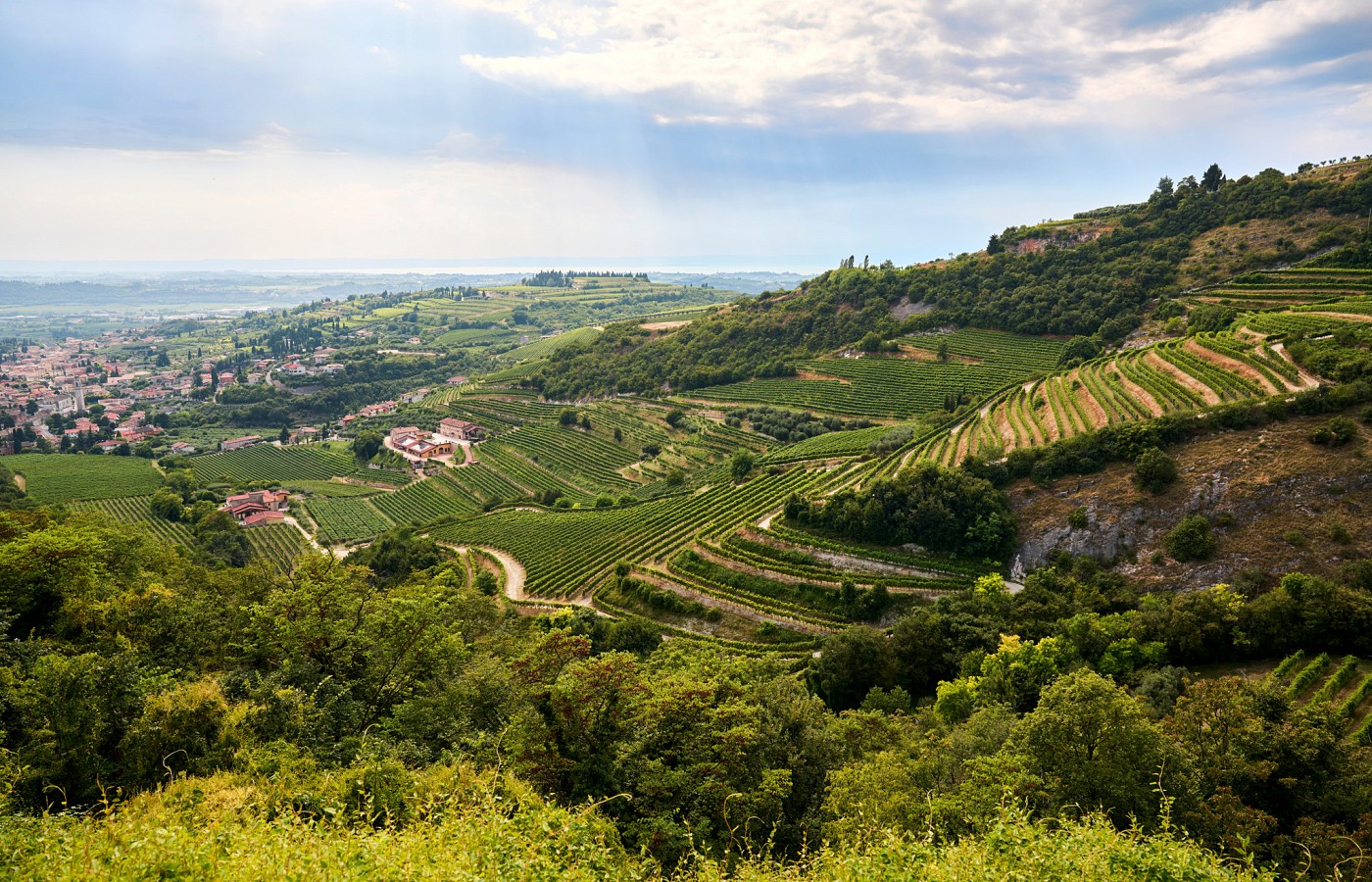
One of Italy’s most beautiful villages, with old stone houses, a Romanesque parish church and wonderful views over Valpolicella
Perched above the vineyards of Valpolicella Classica, San Giorgio di Valpolicella is one of Verona province's most distinctive villages. Stone houses, old courtyards, a Romanesque parish church and hillside views tell a story spanning centuries.
Also known as San Giorgio Ingannapoltron, it belongs to Sant'Ambrogio di Valpolicella and has been part of the Borghi più Belli d'Italia association since 2015.
Near Corte Lavarini, it is ideal for a cultural visit, a walk among historic buildings or a scenic stop while exploring Valpolicella.
San Giorgio Ingannapoltron: a village built on stone
San Giorgio's architectural unity makes an immediate impression. Many buildings use local limestone for walls, doorways, courtyards, steps and roofs. The houses seem to grow directly from the rock beneath the village.
Narrow streets reveal arches, passages, old courtyards and houses preserving rural Veronese architecture. Unlike larger tourist centres, San Giorgio remains compact. Walk through its historic heart, observe building details and easily reach the main sights.
Its elevated position once offered defensive advantages and control over the surroundings. Nearby stone quarries and farmland also influenced the community's economy.
The village still maintains close ties to Valpolicella's traditional activities, from stoneworking to growing vines and olives.
Further information: San Giorgio di Valpolicella – Visit Verona
Why is it called Ingannapoltron?
The curious nickname Ingannapoltron is a famous village feature. According to popular tradition, the village looks closer than it really is from the plain below.
The climb could therefore prove longer and harder than expected, especially when most travel was on foot. The name supposedly jokes about travellers deceived by the apparent distance who underestimated the effort of reaching the top.
This is not a securely documented historical origin, but a locally transmitted explanation now part of village identity.
The nickname also reflects Valpolicella's geography: small hilltop settlements connected by roads through vineyards, slopes and old hamlets.
San Giorgio's Romanesque parish church: the village heart
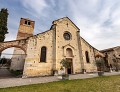
The main monument is the Pieve di San Giorgio on the central square. The place of worship probably originated in the early Middle Ages. In the twelfth century it was enlarged and transformed with the Romanesque features still visible today.
The solid, simple structure mainly uses local stone. Inside are important artworks, including an ancient ciborium attributed to master Orso and his collaborators.
The Romanesque cloister is also notable: arcades and columns create an intimate setting quite different from the village streets and squares.
The church records San Giorgio's religious and social role for surrounding communities when baptismal churches were fundamental to territorial organisation.
Its significance therefore goes beyond architecture, telling the history of rural communities that inhabited these hills for centuries. It is one of Valpolicella's most meaningful places for medieval art lovers.
Further information: San Giorgio di Valpolicella – tourist information
The Antiquarium and the area's ancient origins
Beside the church is the Antiquarium, an archaeological museum collecting evidence from San Giorgio and its surroundings.
The area was frequented before Roman and medieval settlements. Collections include protohistoric finds, Roman evidence, inscriptions and objects reconstructing aspects of ancient life.
Inscribed Roman stelae and stone materials are particularly interesting, documenting inhabitants' relationship with local geological resources.
Finds from different periods confirm these hills' importance long before the present village.
The Antiquarium ideally complements the church visit, showing how today's inhabited landscape preserves millennia of history.
The museum may have closure periods, so check opening before planning your visit.
Further information: San Giorgio Antiquarium – Visit Verona
Valpolicella stone: a tradition still visible
San Giorgio's architecture introduces an activity central to local history: quarrying and working stone.
Around Sant'Ambrogio and nearby hills are quarries historically important for ornamental and building materials.
Among the best-known varieties is Rosso Verona, an ornamental limestone used in floors, cladding and numerous monumental buildings.
Quarriers' and stonemasons' skills supported the economy, leaving visible traces in traditional architecture. Doorways, columns, steps, old walls and pavements show stone's place in daily life.
The landscape retains quarrying marks alongside agriculture and viticulture. This makes San Giorgio particularly interesting: more than a well-preserved medieval village, it records people's relationship with local materials.
Views over Valpolicella and Lake Garda
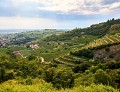
A major reason to visit is its panoramic position. Open areas around the village overlook Valpolicella, hillside vineyards and, on clear days, towards Lake Garda and the Veronese plain.
The view reveals alternating vines, olive groves, small settlements and mountains.
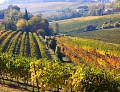
The landscape changes markedly through the year. Spring brings green vines and vegetation; summer thickens the rows; autumn turns leaves yellow, red and orange.
Late afternoon particularly suits photography, as light highlights stone façades and hill profiles.
You need not plan museum or monument visits to appreciate San Giorgio: walks among houses and viewpoints also reveal its character.
Festa de le Fae: a community tradition
Among its most characteristic events is the Festa de le Fae, traditionally held in November.
The occasion involves distributing broad beans, a food bearing symbolic associations with remembrance of the dead since antiquity.
According to local tradition, beans are prepared and distributed to residents and visitors, keeping a custom alive across generations.
The festival remains a community gathering where food, historical memory and popular traditions intertwine. Visitors gain a special opportunity to discover the village through an authentic celebration.
Other cultural and religious initiatives enliven the village throughout the year, promoting its heritage. Consult tourism channels and organisers' announcements for current dates and programmes.
Further information: Municipality of Sant'Ambrogio di Valpolicella
San Giorgio through the seasons
San Giorgio can be visited all year, with different seasonal characteristics.
In spring, hillside vegetation regains colour and temperatures generally suit walking.
Summer brings longer days, although midday can be hot, especially in open spaces and paved streets.
Autumn is especially interesting for scenery, with vineyard colours and traditional events.
Winter brings a quieter atmosphere. Stone façades, little streets and hill profiles stand out, especially on clear days.
Visits to places of worship and the museum depend on openings and scheduled activities.
Planning a visit from Corte Lavarini
San Giorgio lies within Sant'Ambrogio, in the Valpolicella Classica hills. From Corte Lavarini in Fumane, reach it by car on roads connecting the area's main towns.
Allow roughly one and a half to two hours for the historic centre, church and viewpoints. Visiting the Antiquarium, when open, needs extra time.
Use permitted parking outside the narrowest streets and continue on foot. Combine the village with Sant'Ambrogio or other nearby places.
Architecture lovers can compare it with Valpolicella's historic villas and Romanesque parish churches.
Further information: I Borghi più Belli d'Italia · Visit Verona
San Giorgio: a small village with a long history
In San Giorgio, history emerges from the building materials themselves: stone, courtyards, arches and old walls.
The Romanesque church, Antiquarium, traditions and views make it rewarding for anyone exploring Valpolicella beyond its busiest destinations.
A visit during your Corte Lavarini stay reveals a small settlement preserving many aspects of local culture, architecture and history.